Product teams are focused on nailing down the Growth lifecycle via acquisition or retention, also known as Growth Loop. But before that there is a more fundamental loop to focus on which when built right will yield sustainable Growth Loops and more - The Data and Product loop.
The Data and Product Loop
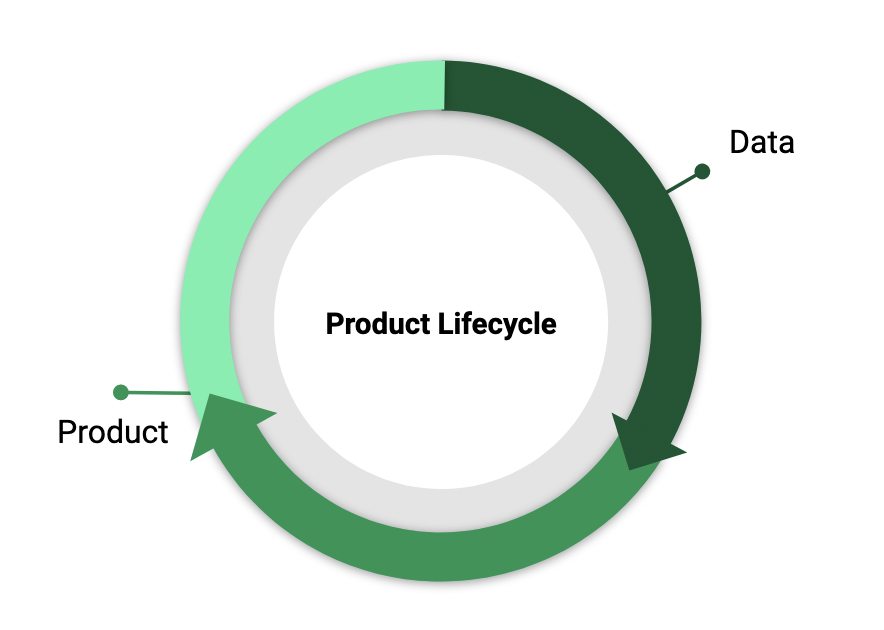
Imagine a few scenarios in the Product lifecycle -
- You are building a new product and want to know how many users are on your platform.
- The product is rolled out to a subset of users and you want to know the impact to the top line by comparing with users who don’t have the product.
- The product is rolled out to all users and you want to know how many new and returning users are using the product.
These seemingly simple questions often takes Product teams down into a spiral in trying to answer them, starting with
- Whom should I ask this question - Engineer, Data Scientist, Data Analyst?
- Is there a self service dashboard for this?
- What does this field mean?
🚨 …and after a few weeks eventually leading to the question “Can I trust this data?”. This forces Product teams to cut corners in the product lifecycle under the name of moving fast.
Now let’s look on the other side of the equation, into the evolution of the Data team
Product Leadership: We need a Data Engineering team because data is all over the place in the organization and Data Science team is spending a lot of time answering mundane questions and the queries are taking too long to run and we need to be data driven.
Some scenarios that play out from here on -
- Data team finds critical dashboards powered by random tables such as
tmp_active_usersoractive_users_v1orjoe_active_usersthat show different results for DAU.- Outcome: We should clean up these tables and have a single source of truth!
daily_active_usershasn’t been updated since the last 7 days since an upstream table has been broken and users have been using stale data.- Outcome: We need to setup alerts when this happens?
- We have a critical Product launching in a week and need to build a dashboard to measure success
- Outcome: We should drop everything and address this first.
🚨 This takes the Data team down a spiral, going from I’m excited to build a state of the art data infrastructure to this data is a mess to there are too many shifting priorities and ultimately leading to developer thrash and burnout.
Clearly this is not a match made in heaven (yet) and ultimately the company shifts further away from being “data driven” to “data nice to have”.
Common symptoms when this occurs
- Only a handful of people in the company know the deep dark secrets of the data.
- No one’s asking data questions before building a new feature or product.
- Data team struggling to quantify their impact and existence.
So how do we make this a successful match..
💡 Invest in a foundational Data Platform at the outset that’s built incrementally with a long term outlook.
Most companies skip this early investment under the excuse of “we need to move fast.” They fail to realize that a Data Platform can be built incrementally with strategic prioritization the same way you build a consumer facing product. When built right, a Data Platform will offer full 360 insight into the business and fuel the Data and Product engine to run in cruise control.
Data Platform can be an overloaded and abstract team. In the next post: How to build a Data Platform let’s unpack what it takes to get this up and running.