The focus of this three part series is on building an efficient marketing engine that can scale Product growth, not just concepts but also provide technical guidance on how to build one without delving too much into organization boundaries and specific job titles.
Part 1 (this article), covers how Marketing teams operate today and why marketing needs a unified platform to win.
Part 2, goes into the what and how to build a unified Marketing platform.
Part 3, uses the unified Marketing platform to design context-driven marketing workflows.
First principles of Marketing
Marketing is all about how users find your product and build enough trust that it can solve a deep user pain point in a cost effective manner.
There are two types of commonly deployed Marketing models to achieve this – sales led and product led marketing.
Sales-Led Marketing
In a sales-led approach, a team of qualified reps drives growth through a structured, hands-on process:
Lead Generation: Reps build and maintain a list of potential buyers — sourcing leads from various channels and enriching them with verified contact info.
Outreach: They reach out directly, usually through email or LinkedIn, aiming to spark interest and get prospects to engage with the product.
Scoring and Labeling: Every response is tracked and classified — from “not interested” to “actively exploring” — helping refine and prioritize the lead list.
Conversion: The most engaged leads are nurtured and pushed toward trying the product, with the ultimate goal of turning them into paying customers.
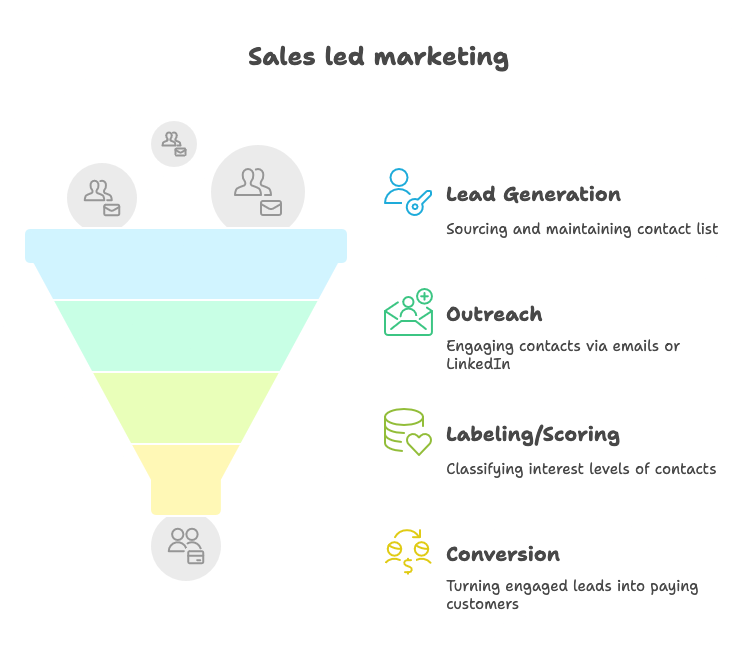
These four steps form a sales funnel — a constantly evolving system where sales teams double down on the areas creating bottlenecks. Each phase can get highly nuanced. For example:
- During lead generation, reps may enrich lists with accurate emails sourced from third-party databases.
- During outreach, they might use dynamic email templates that personalize messaging based on a prospect’s role or industry.
At the heart of it all is the CRM (Customer Relationship Management) system — the single source of truth that tracks every interaction and powers smarter, more targeted selling.
Product led Marketing
Product-led marketing focuses on two key phases: (1) getting the product into users hands as early as possible, and (2) allowing the product to market itself by providing an intuitive experience and delivering real value by solving users problems. (Easier said than done, of course.)
Getting the product to users
The first phase, often referred to as demand generation, involves creating awareness and interest in your product within a clearly defined market.
For example, if you’re selling an observability tool for deploying LLM (Large Language Model) applications in production, your ideal customer profile (ICP) might include companies hosting or fine-tuning LLMs, or internal ML platform teams managing their own LLM deployments.
Once you’ve identified your ICP, the next step is to generate interest. This typically involves engaging users where they already are — in communities like Discord, Reddit, LinkedIn, and Product Hunt — and encouraging them to try your product. Additional demand generation strategies may include SEO-optimized landing pages, paid ads, brand partnerships, and even traditional methods like billboard advertising.
Create a Self-Marketing Product Experience
Once users are trying your product (often through a free trial or credits), the next goal is to ensure the product sells itself.
This means users should be able to realize value — or solve their problems — simply by using the product, without requiring heavy sales or support intervention. Achieving this requires:
- A frictionless onboarding and setup experience.
- An intuitive product flow that meets users where they are in their journey.
- A well-organized library of resources (e.g., FAQs, guides, best practices) to help users self-serve and troubleshoot independently.
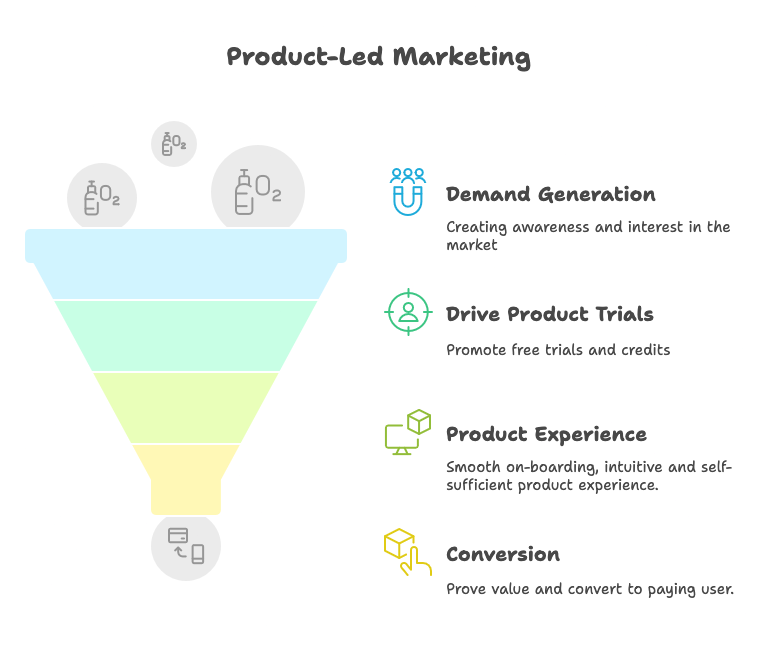
However, delivering a truly self-marketing product experience is challenging. Common traps include:
- Bloated or confusing onboarding processes.
- Skipping critical data collection that could help personalize the experience.
- Underwhelming (or overwhelming) documentation.
- Poor alignment between marketing and product teams, causing mixed messages and missed opportunities.
The reality: A product doesn’t just market itself. It needs to be intentionally crafted to earn that right — by delivering quick wins, clear value, and a delightfully easy experience.
Why Marketing Needs a Unified Platform to Win
Both sales-led and product-led marketing have their strengths — and their challenges. It’s why most companies end up running both, often with big teams and even bigger budgets. But when these strategies operate in silos, they pull away from the core product experience, leading to fragmentation, wasted spend, and shrinking ROI.
A unified marketing platform changes the game. It brings every marketing motion — sales-led, product-led, and everything in between — into one cost-efficient, context-driven system that’s tightly woven into the product itself. Think of it as your Marketing Operating System! — built to drive growth without losing focus.